Pure
A medicinal-grade supplement brand presented as artefacts ripped straight from nature.
00
problem
The supplement industry has become a marketplace of noise — oversaturated with brands competing on spectacle rather than substance. Most products are diluted by unnecessary fillers and artificial compounds, obscuring their potency. Consumers are left unable to distinguish genuine quality from carefully packaged mediocrity. Standards have collapsed. Trust has followed.
solution
Pure Supplements establishes a new medicinal-grade standard — products formulated with natural, potent ingredients and no unnecessary additives, only compounds that support absorption and reduce risk. But standard alone is not enough. The visual identity is built to make this philosophy undeniable at first glance: not a brand created, but a truth discovered.
Pure doesn't begin in a laboratory. It begins in a landscape — in the silence of altitude, at the floor of an ocean, in the raw evidence of nature untouched. The art direction wasn't designed. It was found.
The central tension in supplement branding is artifice. Every competitor signals science through clinical sterility or sells aspiration through glossy lifestyle imagery — both forms of fabrication. Pure needed to exist outside that register entirely. The concept emerged from the idea of the field report: the honest, methodical documentation of something real. Think geological survey, deep-sea specimen log, botanical archive. A system of observation, not invention. If the product is genuinely natural, the visual language should feel like it was pulled from nature itself — catalogued, not manufactured.
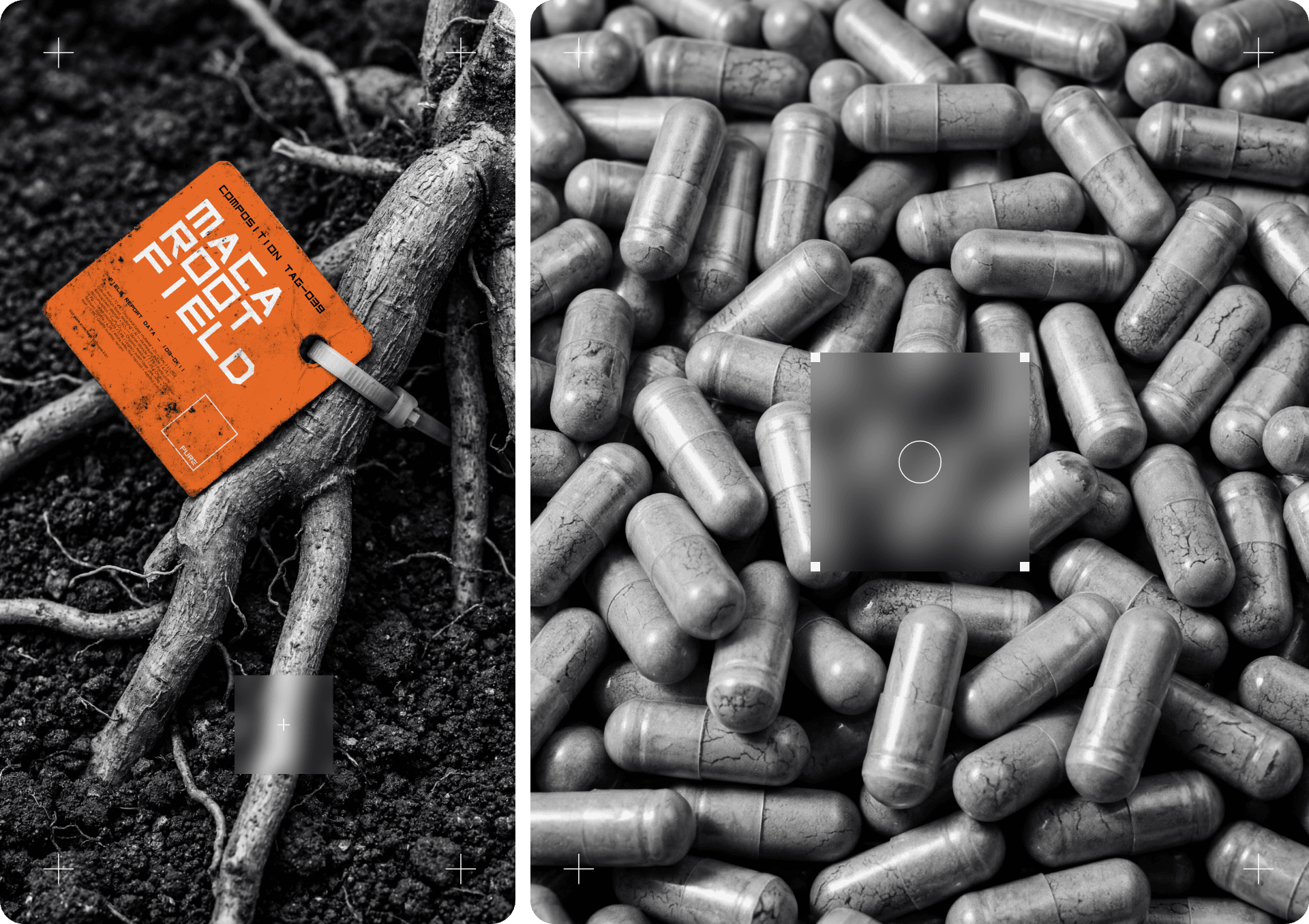
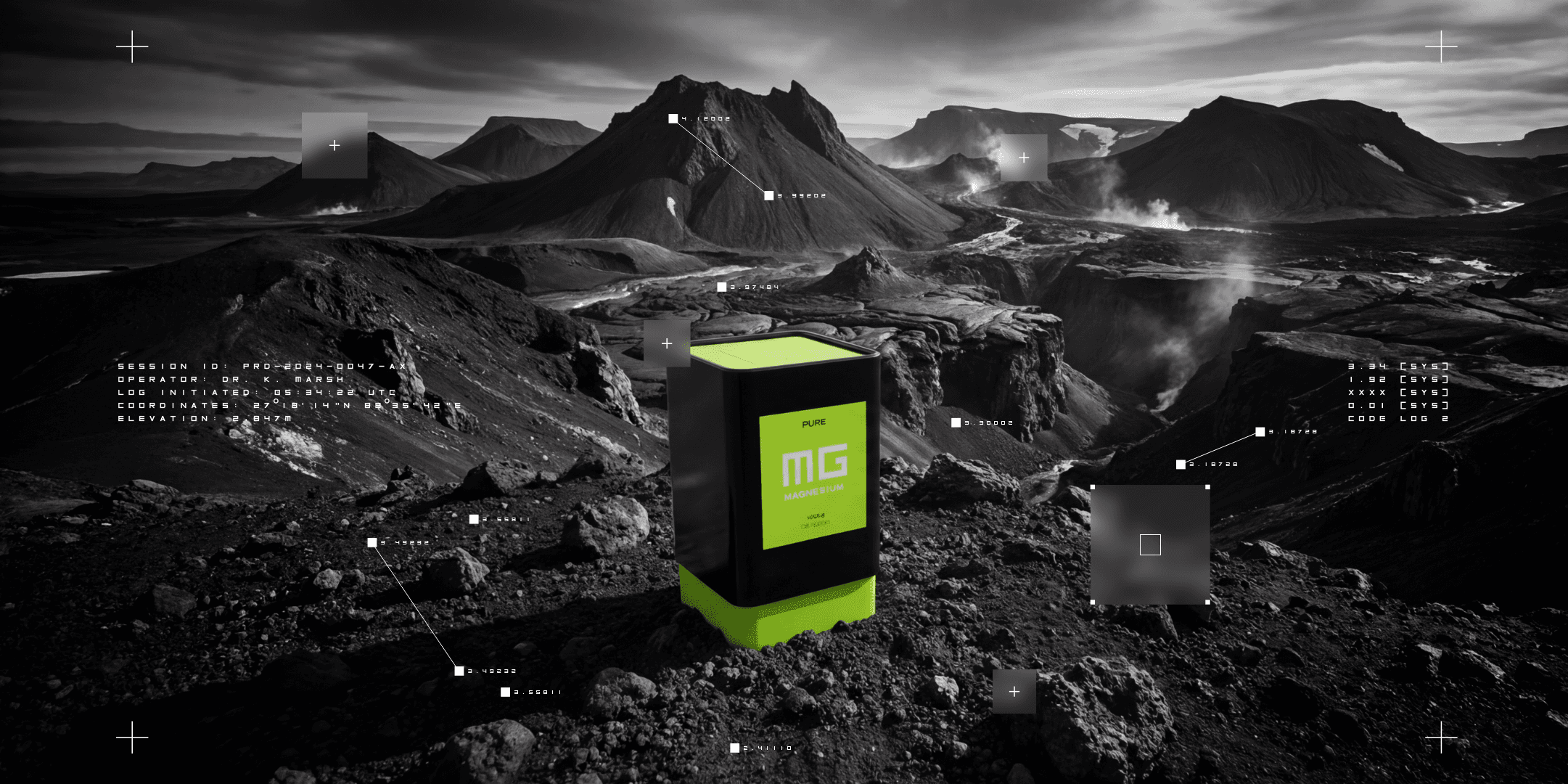
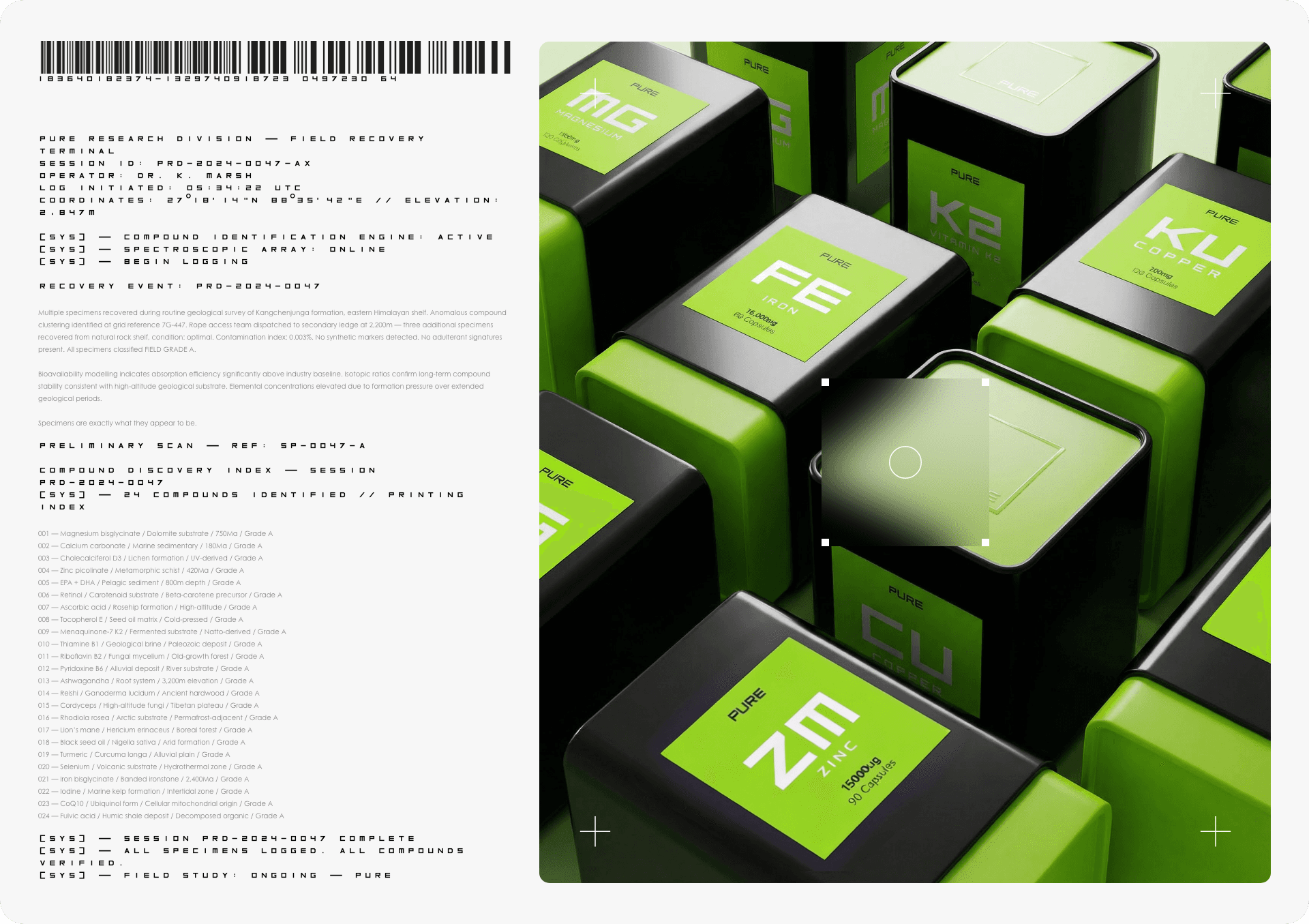
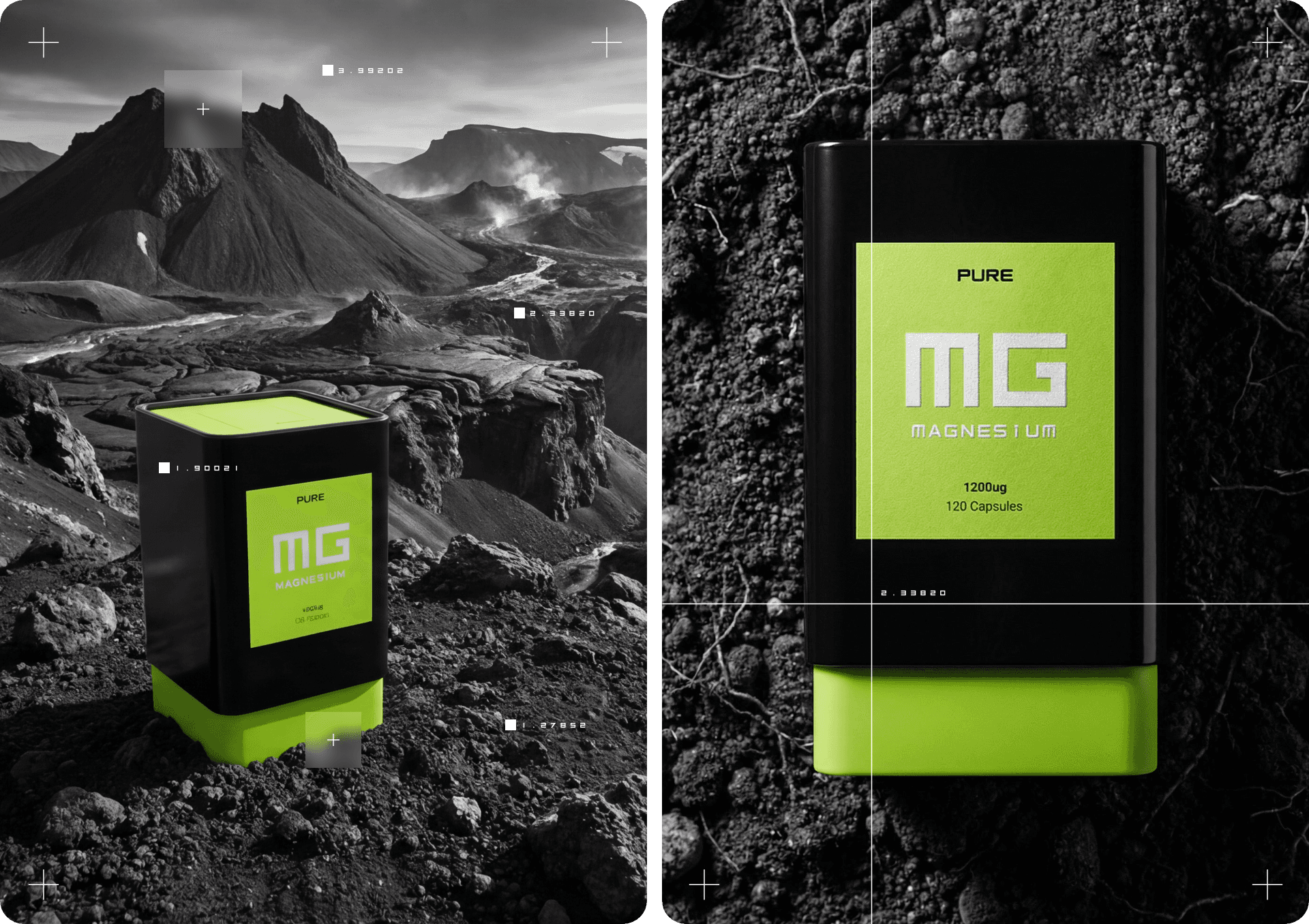
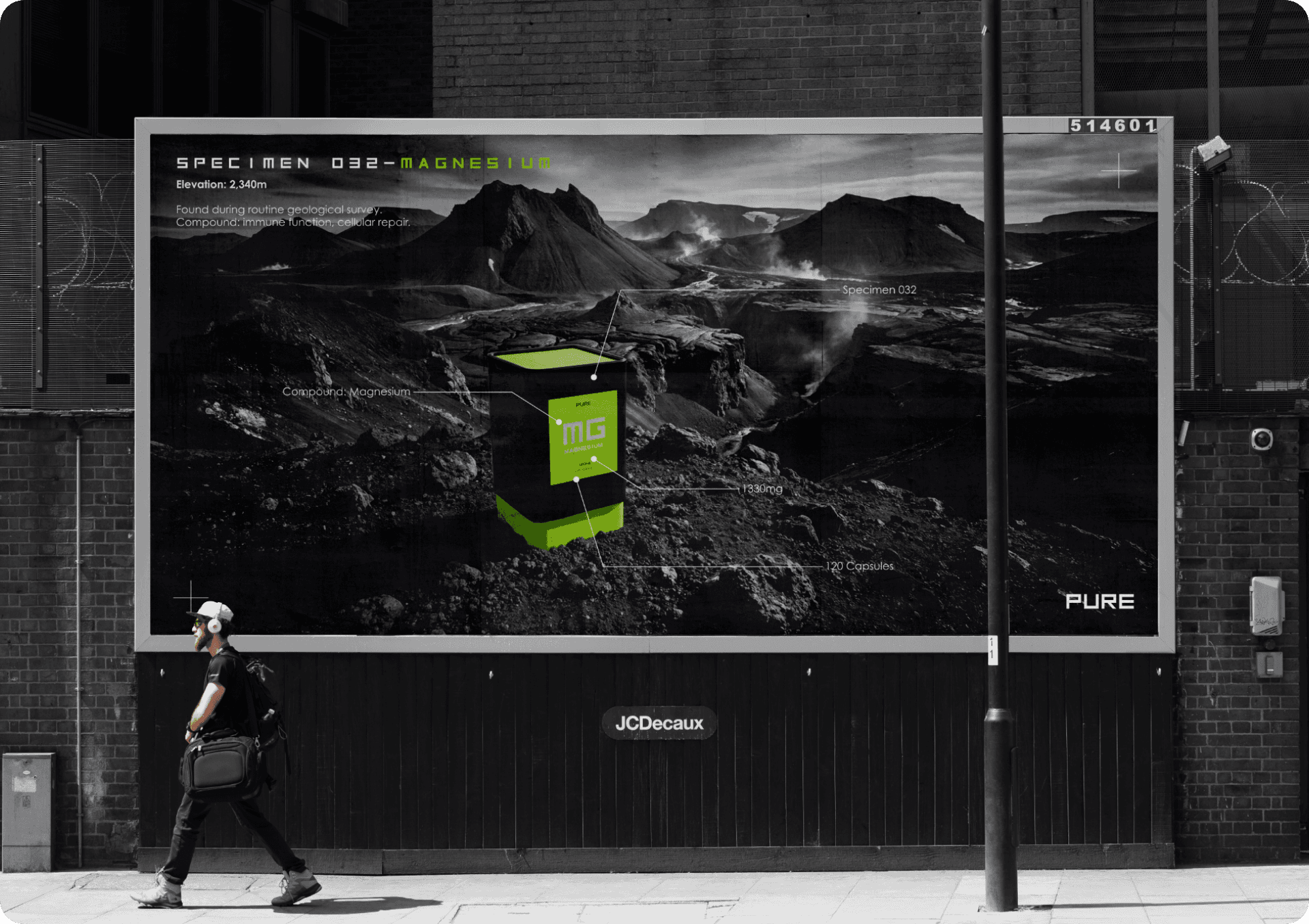
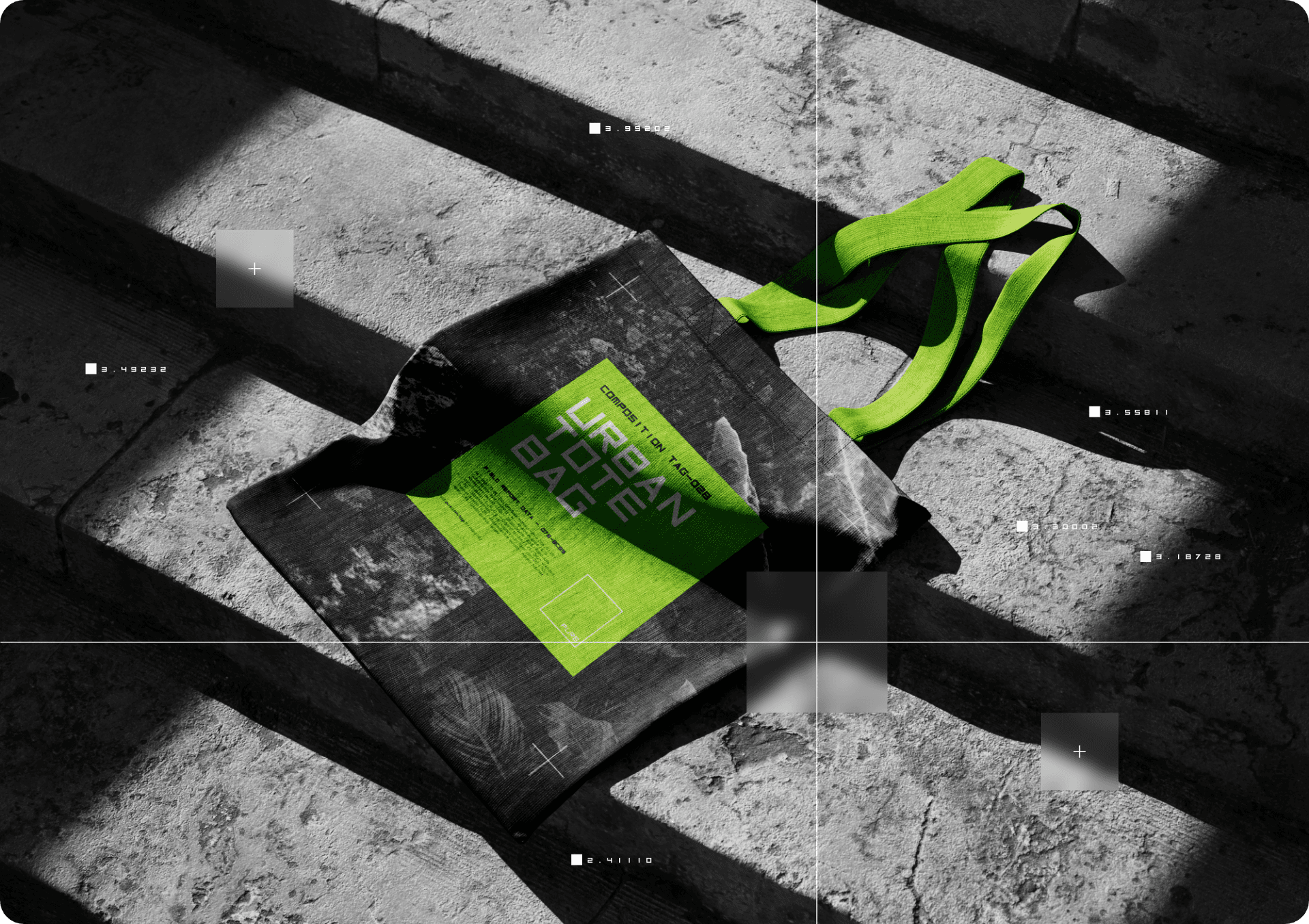
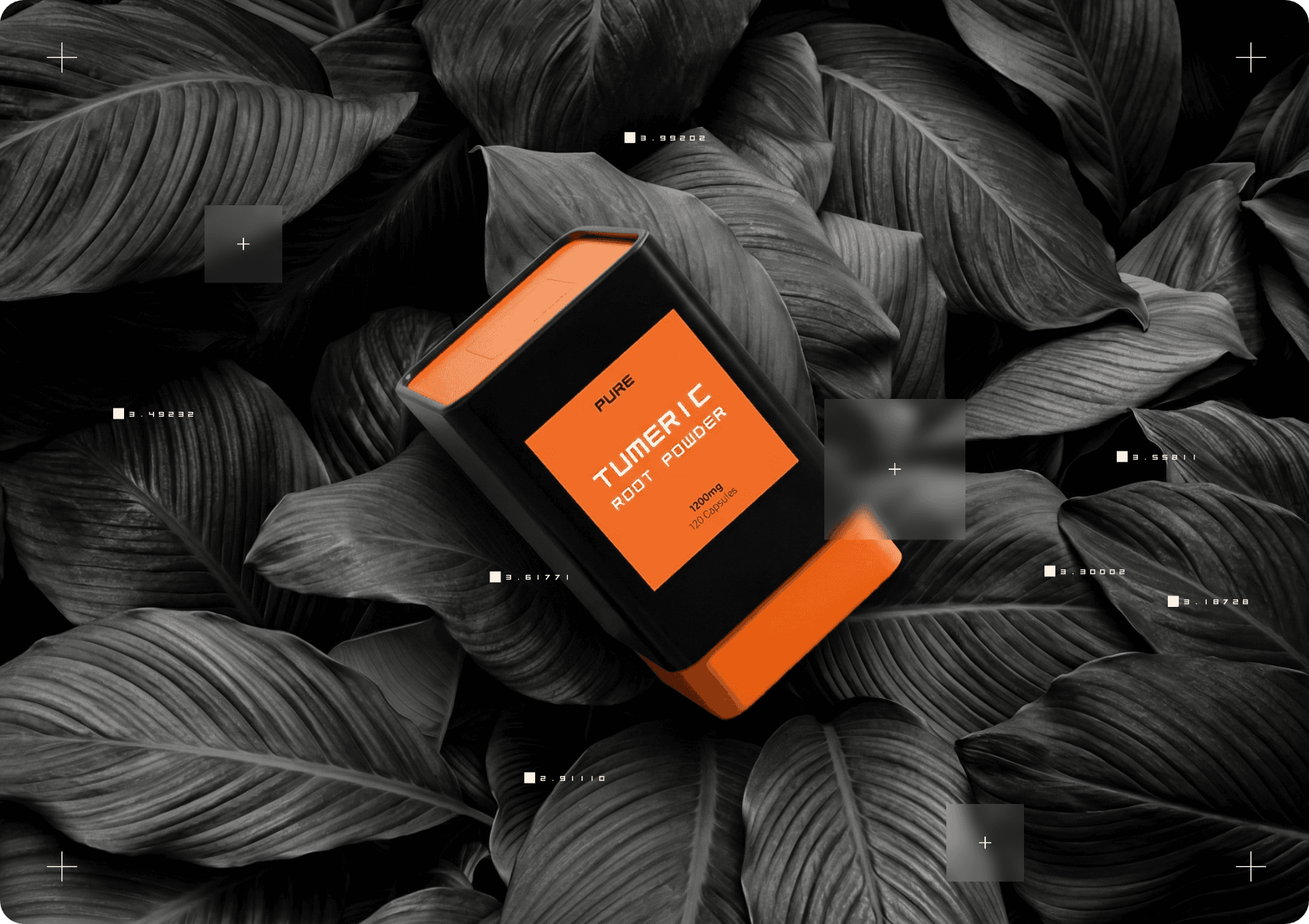
The photography was built around a strict directorial rule: black and white geography as the world, the product as the only thing in colour. Mountain terrains, ocean floors, mineral formations — environments that carry geological weight and silence. The supplement exists within these scenes not as an insert, but as something always belonging there, pushed forward by colour contrast alone. Grid overlays, coordinate crosshairs, field notation typography, and camera-frame iconography layer across the imagery — the visual grammar of documentation. It reinforces the narrative: Pure was not made in a factory. It was catalogued in the field.
The packaging design carries the same logic into the physical object. Containers are formed from recycled plastic in a precise square-profile structure — a shape that reads as purposeful and industrial rather than decorative. The closure system moves away from conventional screw caps entirely: a sleeve-style sliding top that is drawn off to reveal the product inside. The ritual of opening becomes part of the brand experience — unhurried, considered, different. Every material and mechanical decision communicates that Pure operates at a different standard. The container is not incidental to the brand. It is the brand's first argument.
year
2025
timeframe
9 days
tools
Photoshop, Blender, Figma
category
Branding and Identity
01
02
03
04
05
06